
Can the President Use Emergency Powers to Impose Tariffs? What Business Owners in the DMV Need to Know
Key Takeaways:
The U.S. Supreme Court will decide whether the President's emergency powers under the International Emergency Economic Powers Act (IEEPA) extend to imposing tariffs.
This decision could reshape how future presidents use emergency powers in matters of international trade and national security.
Businesses that rely on global supply chains could face increased uncertainty if the ruling favors broad presidential authority.
Import-reliant industries—including many small businesses, partnerships, and closely held corporations—should anticipate potential risks and develop compliance strategies.
The outcome could influence future executive actions affecting tax and trade policy with minimal congressional oversight.
Trade policy may not usually top the list of daily concerns for business owners in Maryland, Virginia, or Washington, D.C., but a case pending before the U.S. Supreme Court should catch your attention. On November 5, the Court is set to hear arguments that could redefine the boundaries of presidential authority in regulating international trade. Specifically, the case tests whether the President can use emergency powers granted under the International Emergency Economic Powers Act (IEEPA) to impose tariffs.
For business owners who operate across borders, import goods, or rely on predictable trade regulations, the Court's decision may impact everything from cost forecasts to compliance strategies and tax planning.
Let's take a closer look at what's at stake—and how you can prepare.
Understanding the IEEPA and Its Role in Trade Policy
The International Emergency Economic Powers Act was passed in 1977 to give the President authority to respond to any unusual and extraordinary foreign threat to national security, economy, or foreign policy. Under IEEPA, the President can block transactions and freeze assets involving foreign entities or countries.
IEEPA's primary use has been in foreign sanctions—for example, freezing assets of hostile governments or punishing individuals or companies for illegal international activity. However, in recent years, some administrations have interpreted these powers more broadly, extending them into the realm of trade and tariffs.
This new case before the Supreme Court centers on whether the imposition of tariffs—a taxation power traditionally held by Congress—falls within the President's authority when acting under the auspices of IEEPA.

Legal Background and the Path to the Supreme Court
The case, (Trump v. V.O.S. Selections, Inc., docket 25-250), challenges tariffs imposed in 2025. The specific tariffs being challenged are:
Reciprocal tariffs (April 2, 2025): 10% baseline duty on most imports, with higher country-specific rates up to 50%
Drug trafficking tariffs (February 1, 2025): 25% on Canadian and Mexican imports; 10% on Chinese imports
The administration cited national security concerns, asserting that foreign steel threatened the domestic industry crucial for defense purposes.
Lower courts have ruled against the government. The U.S. Court of International Trade (May 28, 2025) ruled the President exceeded his authority under IEEPA and permanently enjoined the tariffs. The U.S. Court of Appeals for the Federal Circuit (August 29, 2025) affirmed this decision in a 7-4 en banc ruling, finding that IEEPA does not authorize such broad tariff power and that doing so would violate the major questions doctrine.
The Supreme Court's agreement to hear the case acknowledges that the boundaries of executive authority under IEEPA remain unclear—and now require definition at the highest judicial level.
What This Means for Businesses in the DMV
For businesses based in the D.C., Maryland, and Virginia region, particularly those dealing with imports and international vendors, the ruling could present both legal and operational concerns. Here's why:
1. Legal Uncertainty Around Tariffs and Trade Strategy
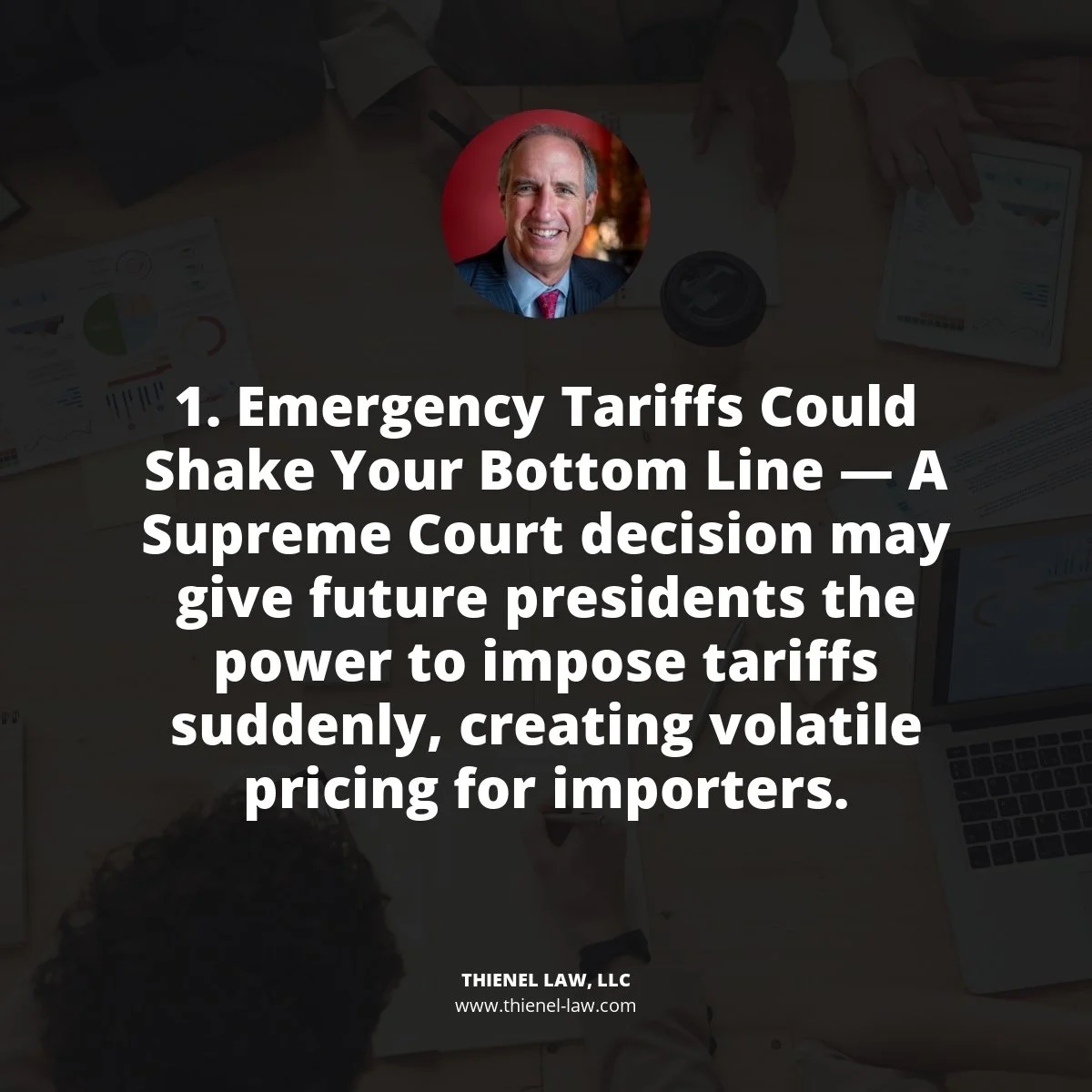
If the Court sides with the government, a future president could impose or remove tariffs at will, citing an emergency. While such flexibility could allow rapid response to global threats, it also introduces uncertainty.
For example, a Virginia-based construction company that imports steel from Turkey may find its cost projections altered significantly within weeks of a new executive proclamation. Long-term contracts may become riskier without stable trade policy frameworks.
2. Impact on Tax Planning and Entity Structure
Business owners often structure their companies, such as S-corporations or LLCs, to manage exposure to varying state and federal regulations. Broad presidential tariff powers could make it more difficult to plan efficiently.
Suppose a Maryland logistics business relies heavily on Chinese electronics. New emergency tariffs invoked by future presidents under IEEPA could trigger sudden supply shortages or cost escalations, making pass-through tax structures less economically attractive. Accountants and tax attorneys may need to reevaluate those structures with additional risk mitigation in mind.
3. Estate Planning and Business Succession
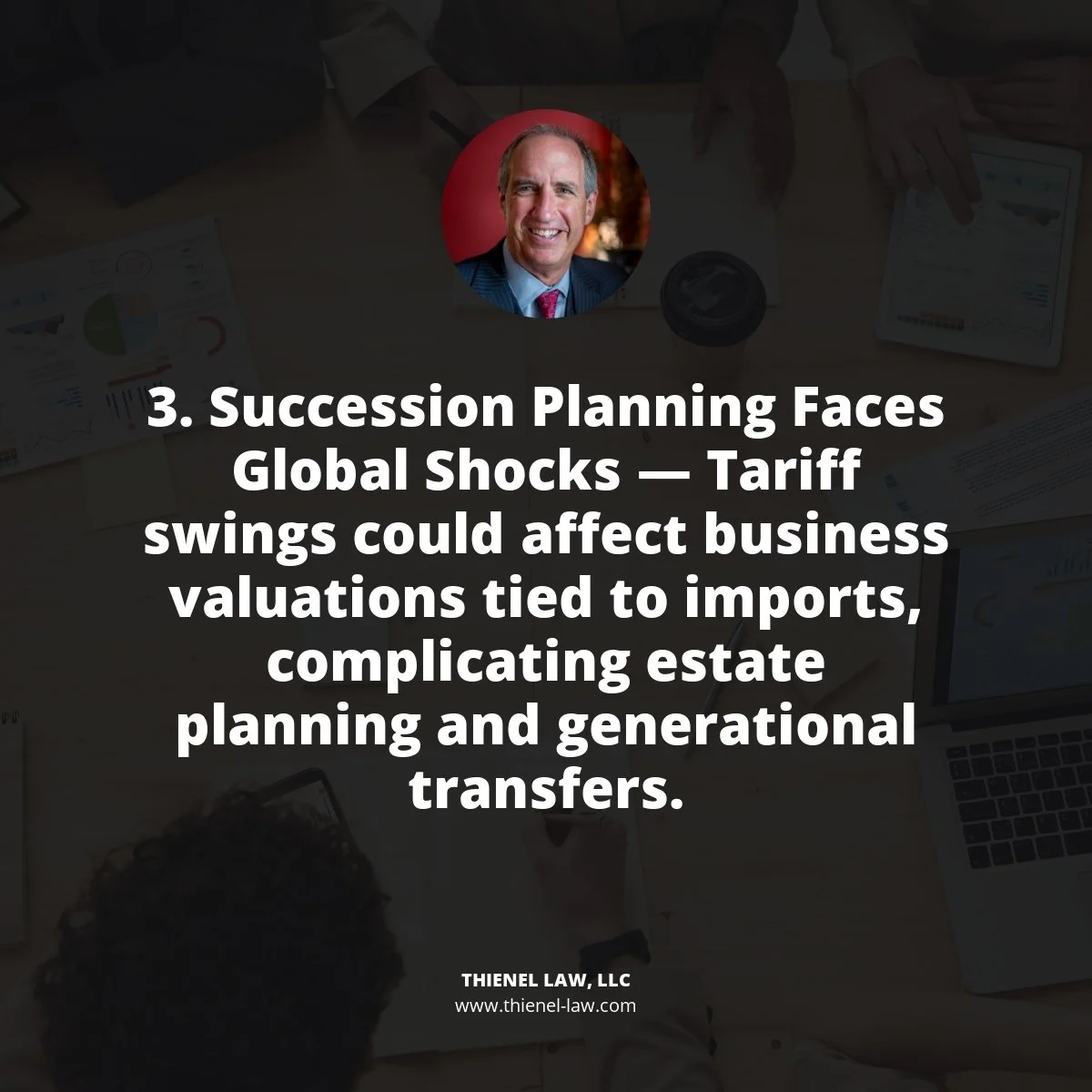
High-net-worth individuals with international holdings or interests in import/export businesses should pay close attention. If presidential powers expand, the geopolitical or economic rationale for trade penalties could shift quickly, affecting valuation of assets overseas or changing liquidity assumptions during succession planning.
Families intending to transfer interest in a business facing import pressure from tariffs may need to reassess their valuation forecasts, insurance policies, or even consider trusts designed for volatile markets.
A Broader Question: Who Controls U.S. Trade Policy?
This case raises a deeper constitutional issue: Who sets trade policy in the United States?
Traditionally, Congress holds the "power of the purse," including the authority to tax and impose tariffs. But over the decades, Congress has delegated more and more discretion to the Executive Branch. Laws like IEEPA gave Presidents the tools to act swiftly in times of economic or security crises, but with limited restrictions.
Critics of such broad authority argue that it undermines checks and balances. Supporters claim that modern economic threats—such as cyberattacks, supply chain disruptions, and sanctions evasion—require fast, decisive action that Congress is not always equipped to deliver.
From a business and compliance perspective, the lack of clarity creates a challenging environment. Companies are tasked not only with complying with trade laws but also with anticipating how shifts in legal interpretation could affect those laws in real time.
How to Prepare: Risk Management and Compliance Best Practices
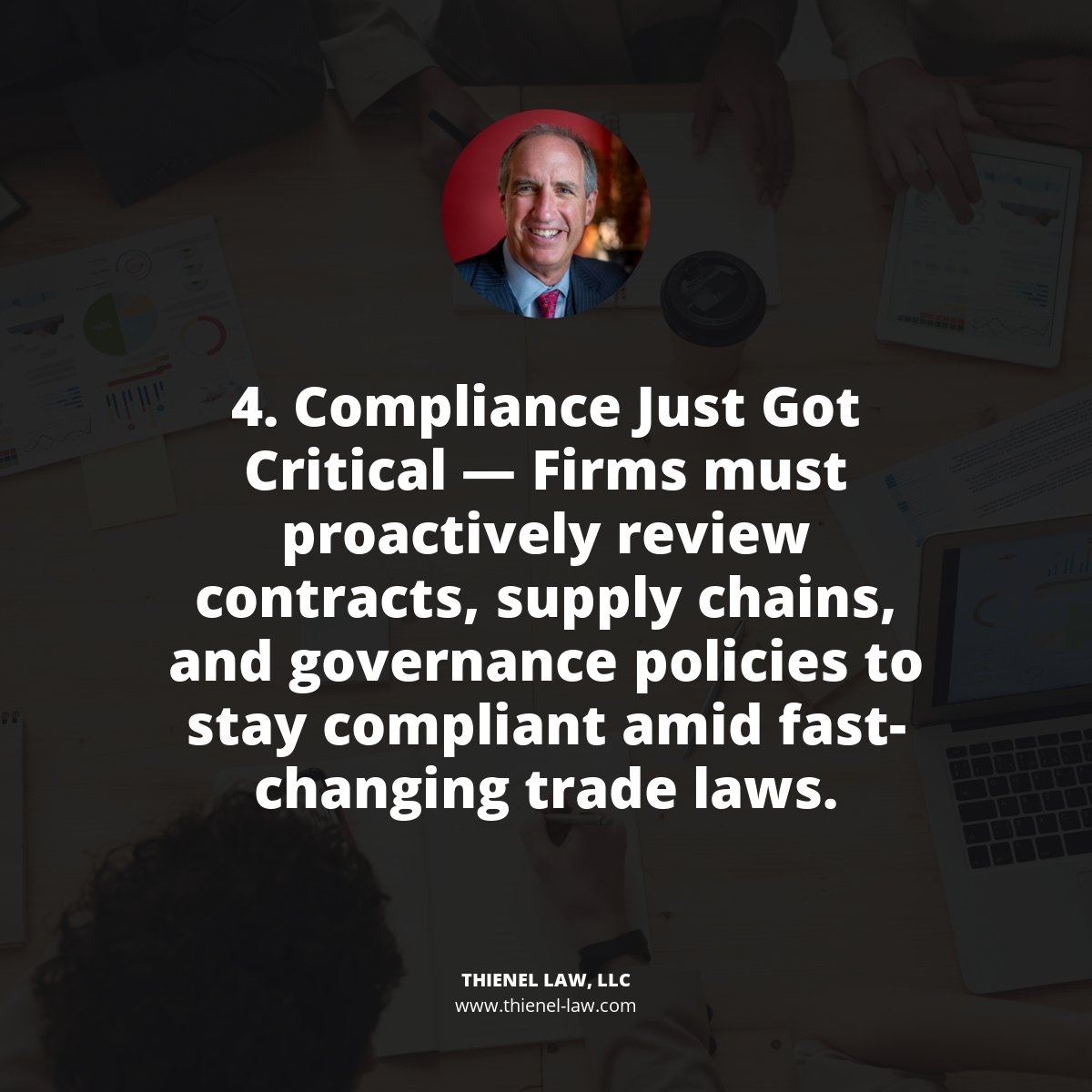
While the Supreme Court's ruling is pending, companies that regularly engage in cross-border commerce should take proactive steps:
1. Review Supply Chains for Vulnerability
Map out which inputs or products could be affected by future emergency tariffs. Diversify suppliers where possible and build contingency plans for high-tariff risk sources.
2. Review Cross-Border Entity Structures
Businesses with international branches or partnerships should examine how sudden tariffs might impact business functions, cash flow, or tax obligations.
3. Update Contracts with Flexibility Clauses
Include force majeure or price-adjustment clauses that specifically address scenarios involving sudden trade restrictions or government-imposed costs.
4. Build Strategic Reserves or Lead Times
Where feasible, import critical materials in advance or develop domestic sources to minimize exposure to sudden tariff-related delays.
5. Stay Informed and Engage Counsel
Trade and tax laws are complex—and moving fast. Business owners should stay close to legal counsel for updates, especially firms like Thienel Law that understand both business operations and regulatory frameworks.
With the law potentially in flux, clarity and professional guidance are more valuable than ever.
Unique Considerations for DMV-Based Firms
Washington D.C.'s proximity to policymaking institutions means businesses here often feel changes in federal policy first. And with high concentrations of international contractors, consulting firms, legal services, and high-net-worth investors in the Maryland and Virginia corridors, shifts in trade authority have a disproportionate impact on local economies.
Companies that work with government supply contracts—or even overseas compliance in supportive sectors like cybersecurity or IT—need to assess their exposure. For instance, a tech company near Tysons Corner working with hardware components from Asia may face dual risks: higher tariffs and more scrutiny under security reviews.
Being located in or near the capital also affords a competitive advantage: access to skilled advisors, legal professionals familiar with federal regulatory trends, and an engaged business community. Use those resources proactively.
What Comes Next
The Supreme Court will likely rule sometime in 2026 on whether the President exceeded powers under IEEPA by imposing import tariffs. Whichever way the decision goes, it will clarify the legal boundaries between the legislative and executive branches on international economic measures.
A ruling narrowing presidential authority would prompt future administrations to seek Congressional input before implementing tariffs under emergency declarations—restoring some predictability to import-reliant industries.
Conversely, a ruling upholding broad executive powers could shift trade strategy further into the hands of the presidency, accelerating political and economic risks for businesses with global ties.
Final Thoughts: Focus on Adaptive Strategy
In a complex legal and business environment, the best asset is preparation. Use the next several months to examine how changes could affect your operations, taxes, and exposure to regulatory compliance.
Whether you're leading a professional practice in Bethesda, managing a logistics business in Arlington, or preparing a family estate strategy in D.C., now is the right time to think ahead.
Need Help Navigating Legal or Tax Strategy?
If you're unsure how this Supreme Court case or potential IEEPA changes apply to your business or personal situation, we're here to help. Schedule a consultation with Steve Thienel to get legal advice tailored to your goals and your industry. Our team brings a clear, practical approach to business law, tax strategy, and risk management—for companies and individuals across Maryland, Virginia, and Washington D.C.

Steve Thienel, Esq.
Founder, Thienel Law, PLLC · Alexandria, Virginia
Steve Thienel is a business, tax, and estate planning attorney who represents clients throughout Maryland, Virginia, and Washington, D.C. He holds a J.D. from the University of Maryland and a Master of Laws (LL.M.) in Taxation from the University of Baltimore. Before practicing law full-time, Steve spent 24 years in senior leadership at CSX Corporation and served as adjunct faculty at Johns Hopkins University's MBA program for a decade, where he headed the economics department. He earned his M.A. in Economics from Virginia Tech, studying under Nobel Laureate James Buchanan.
Admitted to the Maryland, Virginia, and D.C. Bars · U.S. District Courts for the District of Columbia and District of Maryland