
Pillar Two, Global Tax Reform, and Your Bottom Line: What DMV Business Owners and High-Net-Worth Individuals Need to Know

Key Takeaways:
Pillar Two is part of a global tax framework designed to ensure large multinational companies pay a minimum level of tax regardless of where they operate.
Ongoing international negotiations are affecting how these rules are implemented, including a recent push to simplify compliance – which could benefit U.S.-based businesses.
Without continued collaboration, there's a risk of renewed trade disputes and retaliatory tax measures between the U.S., the EU, and other G7 nations.
The current complexity of Pillar Two could result in uneven compliance burdens that disadvantage some jurisdictions – including the U.S. – unless addressed.
Business owners, partnerships, and estate planners must evaluate how these reforms could impact corporate structures, tax strategies, and international expansion plans.
Global tax rules rarely make eye-catching headlines, but the decisions playing out on the international stage can have real consequences for business owners and high-net-worth individuals here in the D.C., Maryland, and Virginia region.
Over the past few years, the OECD (Organisation for Economic Co-operation and Development) has led an effort to create a global minimum tax—known as Pillar Two. While the goal is global tax fairness, the impact is deeply local. How these rules are written and implemented impacts cross-border business strategy, tax planning structures for LLCs and S-Corps, and ultimately, your financial standing.
For DMV-based business owners or families managing significant assets, understanding these developments isn't just helpful—it's essential to stay two steps ahead.
Let's unpack what Pillar Two is, what's at stake, and why the current push to reduce complexity could actually work in your favor for financial and tax planning.
What Is Pillar Two—and Why Should You Care?
At its core, Pillar Two sets a 15% global minimum tax on large multinational enterprises with annual revenues above €750 million (roughly $880 million). These companies could be required to pay top-up taxes if they operate in jurisdictions where the corporate rate falls below that threshold.
On the surface, this might not seem relevant to small business owners, partnerships, or even many domestic corporations. But digging deeper, a few crucial implications emerge:
U.S. tax policy is now being benchmarked against global standards. If other countries implement simpler, more attractive tax frameworks, foreign companies may gain a competitive advantage.
Compliance can trickle down. Complex reporting requirements in foreign jurisdictions may affect subsidiaries, joint ventures, or U.S.-based companies with international clients.
The ripple effect impacts structuring decisions, estate planning vehicles, and even how investors evaluate new markets.
As of December 2025, the United States has not implemented Pillar Two. Instead, Congress enacted the One Big Beautiful Bill Act (OBBBA) in July 2025, which reformed and made permanent the U.S. system of Global Intangible Low-Taxed Income (now called Net CFC Tested Income or NCTI) and Foreign-Derived Intangible Income (FDII) as an alternative to Pillar Two's framework. The G7 has proposed a 'side-by-side' approach that would exempt U.S.-parented groups from Pillar Two while allowing other countries to implement Pillar Two.
President Trump's administration has withdrawn the United States from the Global Tax Deal and OECD commitments, taking a confrontational stance toward Pillar Two implementation. As of late 2025, the U.S. is threatening retaliatory measures against countries implementing Pillar Two against U.S. companies. Bilateral negotiations and the feasibility of the proposed "side-by-side" arrangement remain uncertain given the U.S. withdrawal from the Global Tax Deal.
Why Is the OECD Under Pressure to Simplify?
Despite achieving broad political agreement on the concept of a global minimum tax, the implementation of Pillar Two has hit a few speed bumps. Namely, the rules are complex, and the compliance burdens are steep—especially for U.S.-headquartered companies.
The crux of the issue lies in potential disparities. The U.S. tax system, while robust, doesn't mirror the OECD's Pillar Two rules directly. Instead, it relies heavily on the Global Intangible Low-Taxed Income (GILTI) regime and foreign tax credits. These differences mean that U.S. companies may shoulder more administrative overhead to stay compliant, or worse—face double taxation.
Without greater alignment, countries may start reaching for old tools: retaliatory digital services taxes, withholding regimes, and transatlantic disputes we thought were in the rearview mirror.
The solution? Simplify.
The OECD and G7 countries—including the U.S.—are being urged to work together on streamlined rule interpretations and parallel implementation. If done right, it could reduce compliance costs and create a more level international playing field.
However, the U.S. has adopted an alternative (NCTI/FDII) rather than Pillar Two. The Trump administration has withdrawn from the Global Tax Deal as of November 2025. Recent Congressional changes (OBBBA) have reshaped the U.S. approach including:
GILTI was renamed to Net CFC Tested Income (NCTI)
The GILTI deduction changed from 50% to 40% (NCTI deduction now 40%)
The foreign tax credit for NCTI increased from 80% to 90%
FDII was made permanent with a deduction that results in an effective rate of approximately 13.125%
BEAT rate was fixed at 10.5% rather than rising to 15%
These changes make the U.S. approach less aligned with Pillar Two but cement the U.S. commitment to its alternative framework. The "ongoing negotiations" are now more uncertain and contested given U.S. opposition.
How This Impacts DMV Area Business Owners
You may not run a multinational firm today, but if your business sells online in global markets, holds IP overseas, or is part of a U.S.-foreign joint venture, these regulations matter.
Let's look at how these tax developments could show up in real life.
Example 1: S-Corp with Foreign Investors
An S-Corporation in Northern Virginia, co-owned by a U.S. founder and a European investor, may find itself navigating Pillar Two-related reporting if it expands into Canada or the EU. If the OECD's simplified rules align with U.S. practices, the S-Corp could avoid overlapping requirements. If not, complex entity structuring—or even conversion to an LLC or C-Corp—may become necessary.
Example 2: Estate Planning and Foreign Trusts
A Maryland family with a high-net-worth estate and overseas trusts might experience unexpected shifts as countries adopt Pillar Two and restructure international tax treaties. Depending on how beneficiaries are classified and where the trust assets sit, income from lower-tax jurisdictions could be subject to extra scrutiny. Thoughtful restructuring and compliance planning is key.
Example 3: LLC Operating Internationally
A D.C.-based LLC offering SaaS products to clients in Europe could be indirectly impacted by the implementation of Pillar Two. If local affiliates are set up abroad, those entities may fall under foreign tax regimes now shaped by these changes. Keeping compliance lean and intentional can support growth without triggering preventable exposure.
Big Picture Strategy: Avoiding the Cost of Complexity
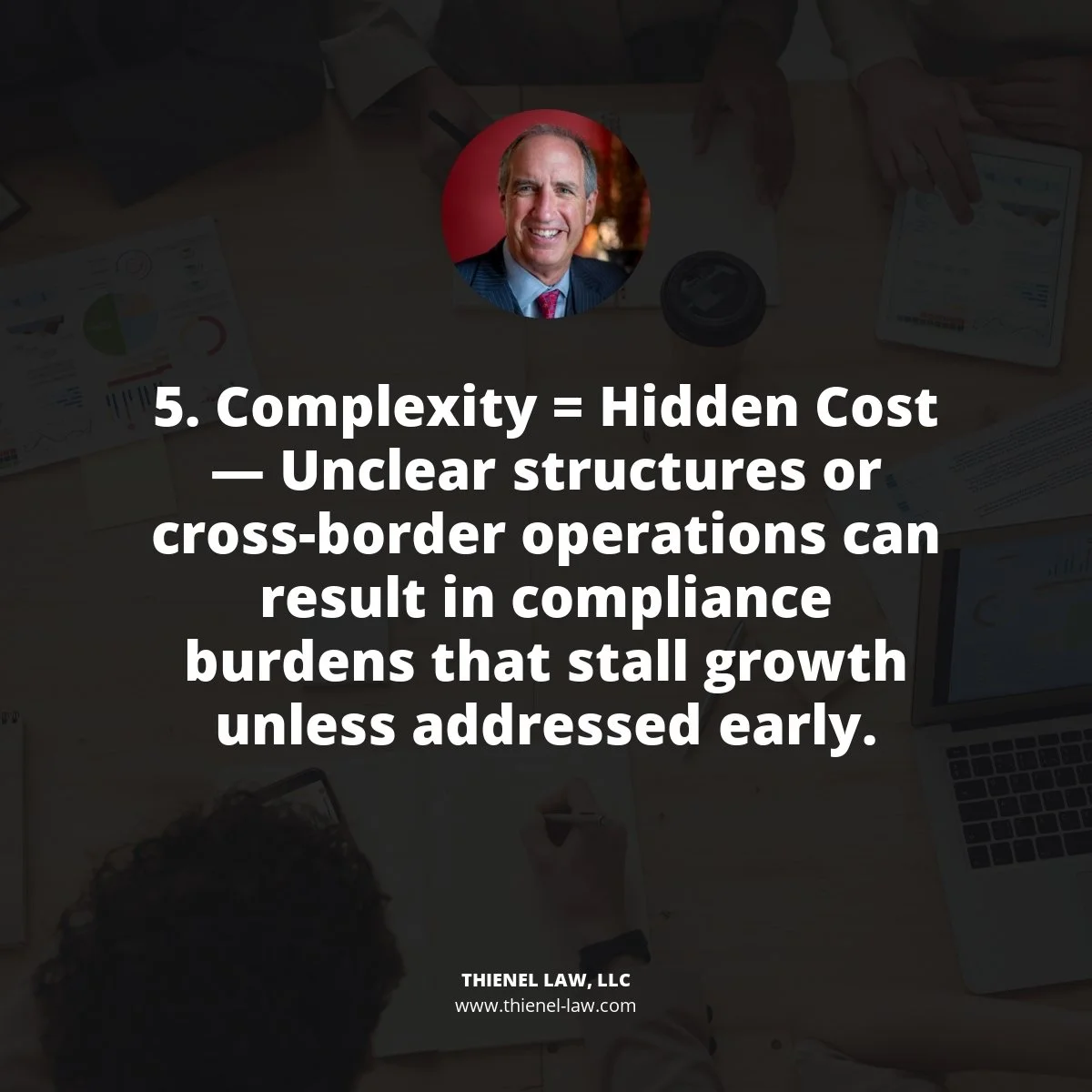
Here's a legal truth we see time and again at Thienel Law: complexity creates risk.
Pillar Two, while aimed at fairness, introduces multilayered technical rules. For DMV businesses just starting international expansion—or families with multijurisdictional footprints—compliance can become both expensive and uncertain if proactive planning is ignored.
Some best practices:
Reassess corporate structures in light of potential new foreign top-up taxes or minimum effective tax rates.
Engage in a tax risk review before entering or investing in foreign markets, especially if thresholds for Pillar Two rules are within reach.
Where possible, align entity frameworks with the U.S. approach (GILTI, BEAT, FDII) while monitoring changes in OECD implementation.
Use estate planning vehicles that can withstand multijurisdictional scrutiny if beneficiaries or assets cross borders.
An Important Insight: Simplicity Isn't Just a Win for Global Giants
While large multinational companies are the direct targets of Pillar Two, the effort to simplify the rules can significantly benefit U.S.-based businesses of all sizes. By aligning standards and reducing redundant filings, the compliance burden becomes more predictable.
This is especially helpful for high-growth companies in the DMV region looking to scale internationally. The less ambiguous the tax environment, the easier it becomes to plan, hire, and invest.
And for attorneys and tax professionals advising individuals with family offices or high-net-worth estates, this simplification reduces the chance of conflicting obligations or tax inefficiencies across borders—issues that often require advanced counsel to unwind.
Reducing ambiguity helps real people succeed in real business. Period.
Where the Risk Still Lies
Let's be clear: simplification is not a magic bullet. If the OECD, G7, and U.S. Congress fail to cooperate, we could face:
A patchwork of interpretations across G7 jurisdictions
Heightened audit risks from foreign tax authorities
Return of retaliatory digital service taxes targeting major U.S. firms
Administrative headaches for law-abiding companies caught in the middle
The best way forward? Ongoing transparency, consistent reform, and close coordination—internationally and at home.
How Thienel Law Helps Businesses Stay Compliant and Strategic
At Thienel Law, we focus on helping business owners, professionals, and high-net-worth families in the D.C., Maryland, and Virginia region thrive through complex legal environments.
Tax policy is one of the most powerful forces affecting a business trajectory, estate plan, or investment decision. And global developments like Pillar Two are shaping more than just fortune 500 balance sheets—they're impacting how everyday entrepreneurs protect what they've built.
We routinely assist clients with:
Business formation and restructuring with tax efficiency in mind
Cross-border ownership issues and asset protection strategies
Tax planning for LLCs, S-Corps, partnerships, and C-Corps
International estate and trust planning
Strategic audits of corporate tax exposure and compliance systems
We don't do generic planning. We build solutions tailored to your goals, risk tolerance, and future growth.
Final Thoughts: Stay Informed, Stay Strategic
Global tax rules are changing faster than most business owners realize. What once felt like a G7 summit talking point is now becoming daily operational reality. The simplification of Pillar Two may ease the path forward—but only for those prepared to act with clarity and foresight.
If your business or estate has international elements—or ambitions—don't wait for the rules to settle themselves.
You need an advocate who understands the evolving landscape and who can spot how international developments intersect with local realities in Maryland, Virginia, and D.C.
If you're unsure how this applies to your business or personal situation, we're here to help.
Schedule a consultation with Steve Thienel to get advice tailored to your goals. We'll make sure your legal strategy is aligned with where the world—and your business—is going.
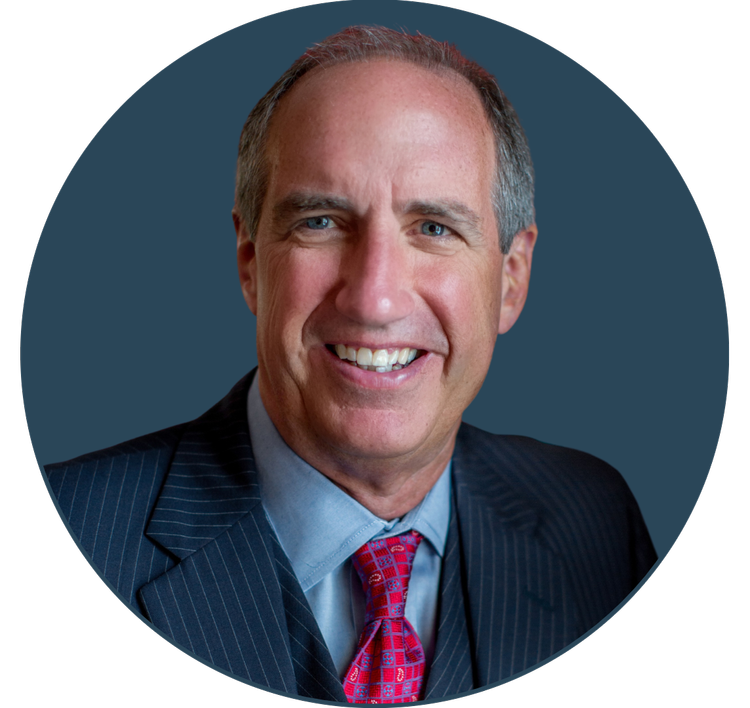
Steve Thienel, Esq.
Founder, Thienel Law, PLLC · Alexandria, Virginia
Steve Thienel is a business, tax, and estate planning attorney who represents clients throughout Maryland, Virginia, and Washington, D.C. He holds a J.D. from the University of Maryland and a Master of Laws (LL.M.) in Taxation from the University of Baltimore. Before practicing law full-time, Steve spent 24 years in senior leadership at CSX Corporation and served as adjunct faculty at Johns Hopkins University's MBA program for a decade, where he headed the economics department. He earned his M.A. in Economics from Virginia Tech, studying under Nobel Laureate James Buchanan.
Admitted to the Maryland, Virginia, and D.C. Bars · U.S. District Courts for the District of Columbia and District of Maryland