
Who Benefits Most from Corporate Tax Cuts? A Closer Look for Business Owners in Maryland, D.C., and Virginia
Key Takeaways
Recent changes under the OBBBA corporate tax reform most significantly benefit industries with tangible production, such as manufacturing, construction, and utilities.
Service-based businesses may see less relief, creating a varied landscape of opportunity and risk for Maryland, D.C., and Virginia companies.
Pass-through entities like LLCs and S-Corps may need to reassess their structure in light of the updated corporate tax environment.
Estate planners and high-net-worth individuals involved in closely held corporations could see new implications for succession planning and tax mitigation.
Strategic tax planning, embedded within sound legal and business frameworks, is more important than ever for firms operating in the DMV region.

Understanding Corporate Tax Cuts Through the Lens of Industry
For business owners across Maryland, Virginia, and Washington, D.C., changes to federal tax policy always ripple close to the shoreline. When the Opportunity to Better Business and Boost America Act (OBBBA) introduced revisions to the corporate tax code, the immediate question many business leaders asked was: What does this mean for my business?
As details unfold, one clear reality emerges—some industries are walking away with a noticeably larger share of the tax benefits. Specifically, businesses centered around tangible production—manufacturing, energy, construction, and similar sectors—stand to gain the most from OBBBA's corporate tax shifts.
But what does that actually mean for companies in the DMV region? Whether you're managing a mid-sized fabrication company in Frederick, leading a construction partnership in Fairfax, or running a boutique law firm in Washington, D.C., the downstream implications could be significant.
Here's what you need to know, and how to position your business to benefit—or at least avoid pitfalls—as the tax landscape evolves.
Who the Winners Are: A Breakdown by Industry
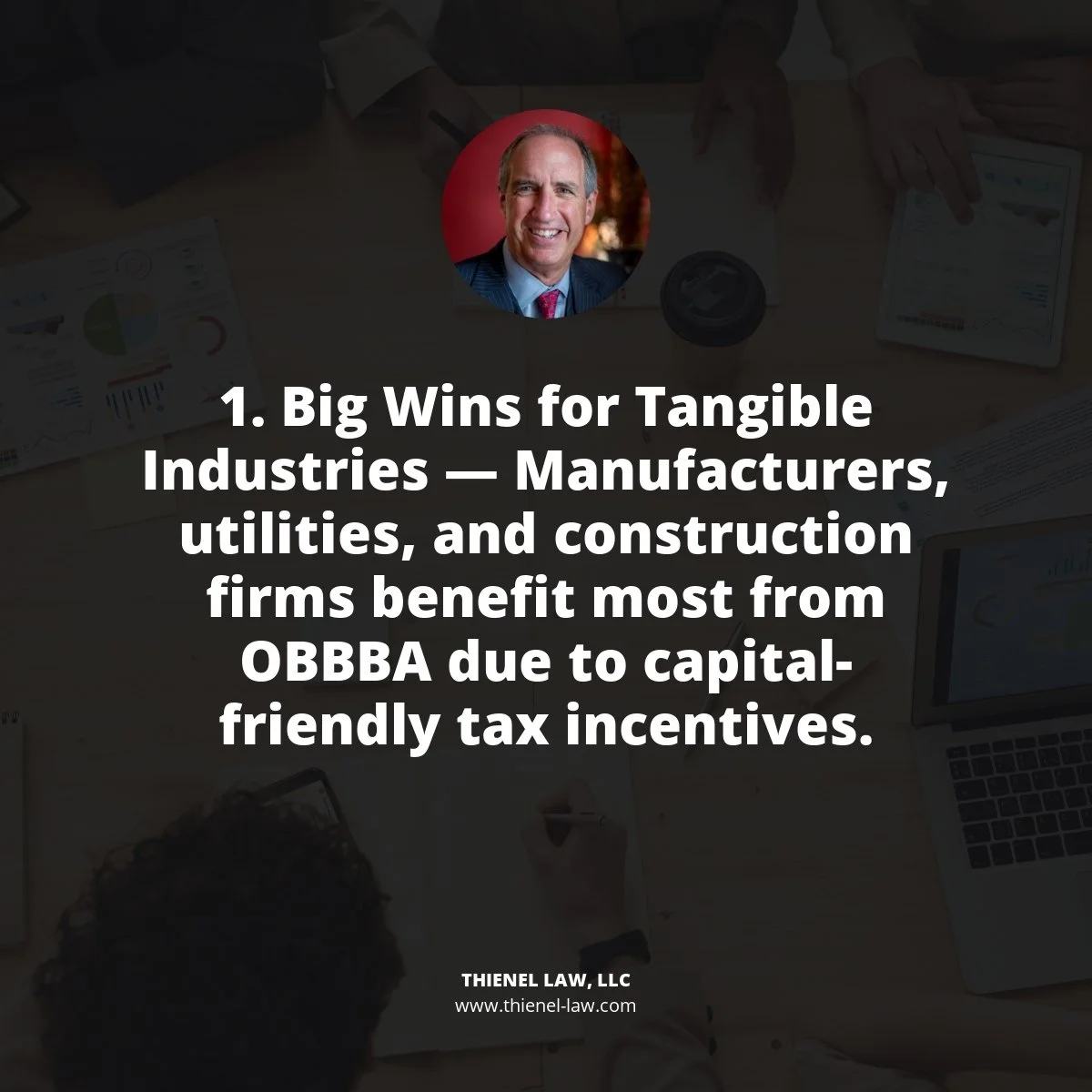
The data emerging from early implementation of OBBBA reveals that corporate tax liabilities fell more sharply for companies engaged in physical goods and infrastructure. Manufacturing firms, utility providers, and construction companies are seeing the greatest percentage reductions in tax burden.
Why? One reason is that these businesses often maintain high capital investments in equipment, property, and raw materials. The recent tax changes favor these structures through accelerated depreciation rules, lower effective tax rates, and favorable treatment of reinvested capital.
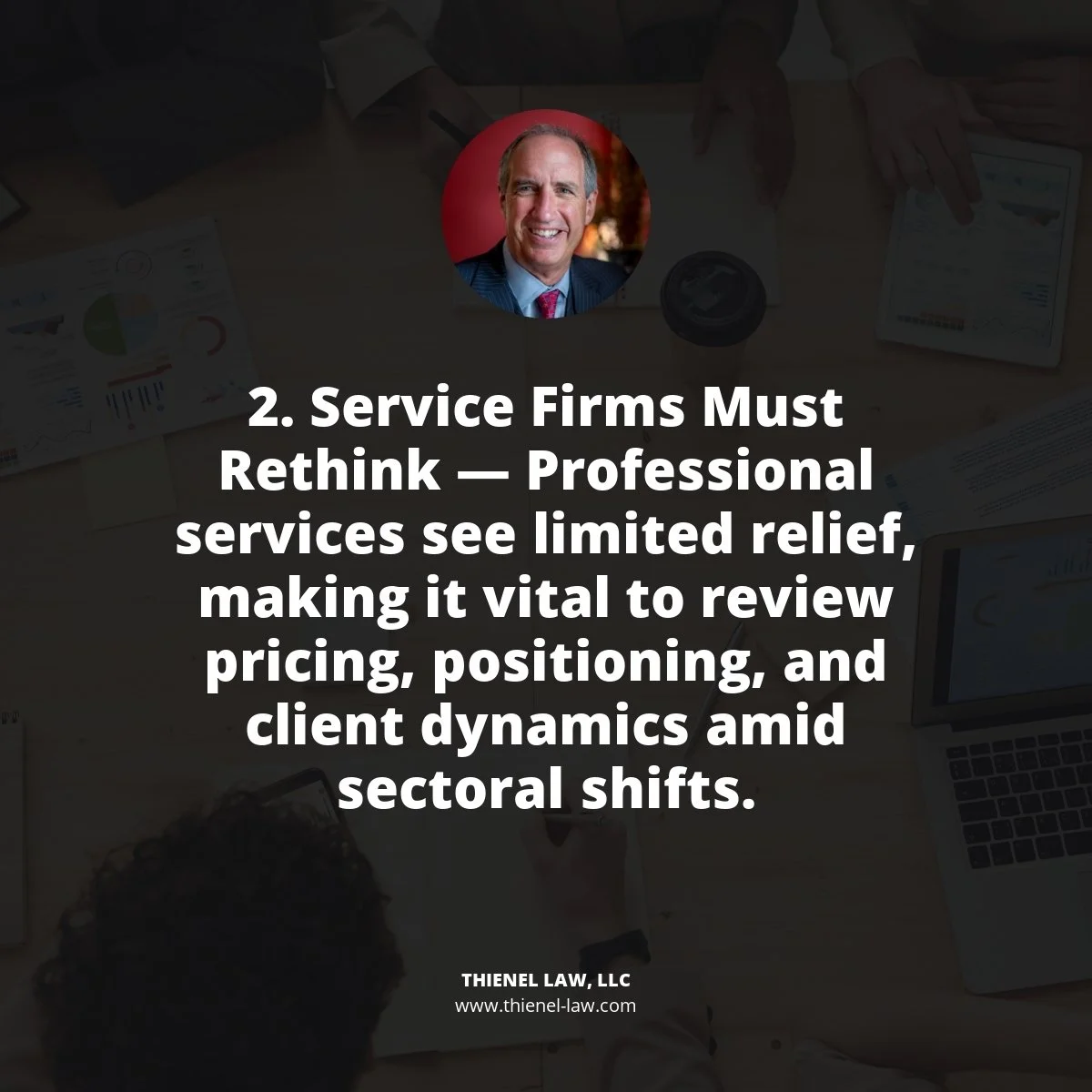
On the other hand, firms that primarily sell services—such as professional firms, marketing agencies, consultants, and healthcare providers—are not receiving the same level of tax benefit. Their cost structures are different (often driven by talent, not machinery), and that creates a disconnect under OBBBA.
Even if your company isn't in manufacturing, these shifts should grab your attention. Understanding how tax advantages flow through various sectors is key to strategic planning, competitive positioning, and long-range decision making.
Implications for Pass-Through Entities: LLCs, S-Corps, and Partnerships
For many small and mid-sized businesses in Maryland and Virginia, the preferred structure is a pass-through entity—think LLCs, S-Corporations, or general partnerships. Rather than paying corporate tax, these entities pass income through to their owners, who then report it on their personal tax returns.
At first glance, it might seem the OBBBA corporate tax changes don't directly apply. But the takeaway here is more nuanced.
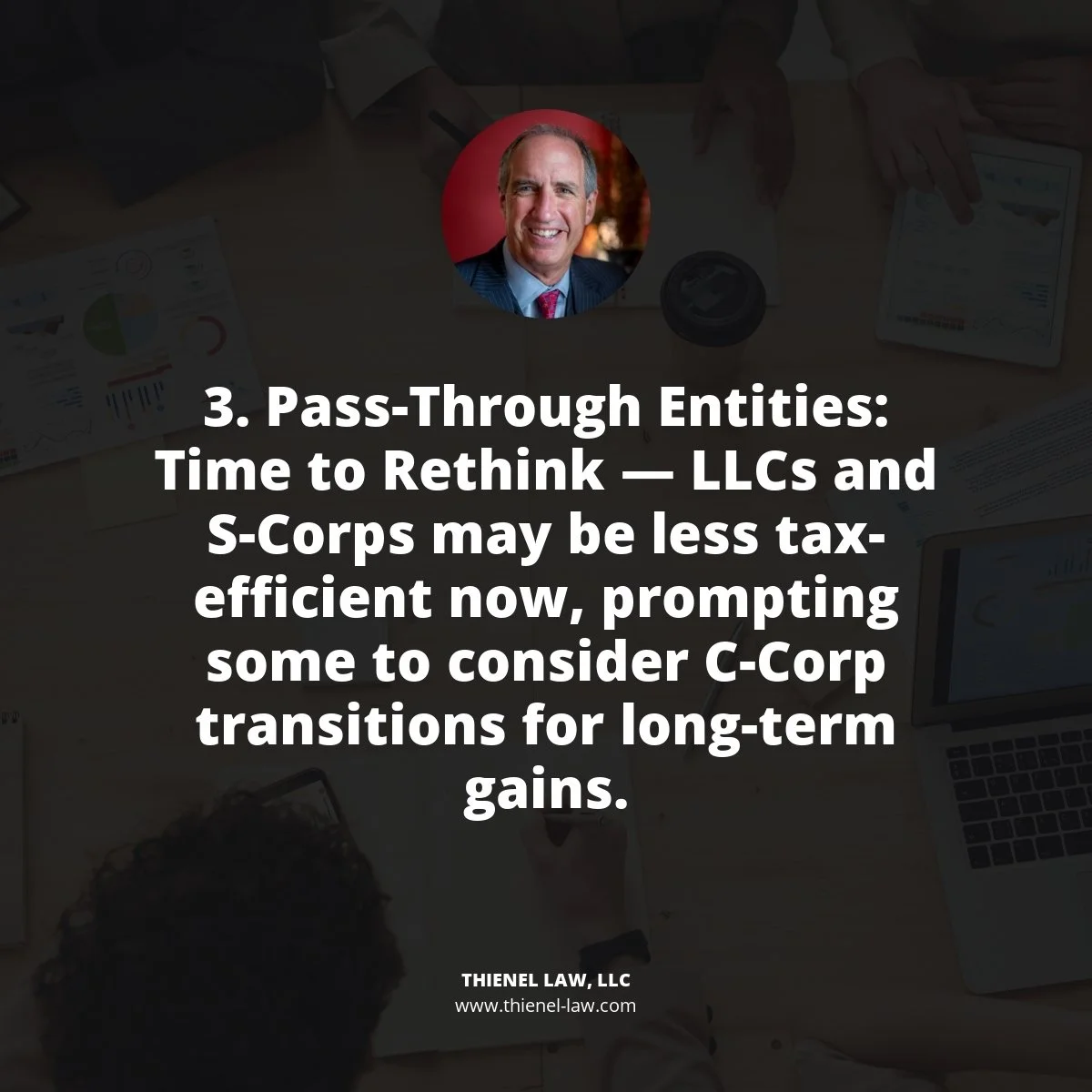
Because C-Corporations (especially those in manufacturing and construction) are now enjoying significantly reduced tax rates, pass-through entities operating in similar industries may begin to see themselves at a disadvantage. Where a manufacturing firm previously chose an S-Corp structure for tax efficiency, a recalibration may now be in order given the more favorable treatment of C-Corps.
This type of shift won't be sensible for everyone. A transition to C-Corp status has long-term implications, including different rules for owner compensation, double taxation concerns at the dividend level, and changes in succession planning. But in some cases, a restructure may unlock real tax savings that increase net cash flow.
A practical example:
Imagine a custom cabinetry LLC operating in Annapolis. Their revenue has grown steadily over the past decade, and they're now evaluating whether reinvestment or sale makes more sense over a 5-year horizon. Under the new tax regime, switching to a C-Corp might significantly reduce taxes on reinvested earnings used to purchase equipment or expand operations. At the same time, such a transition needs to be balanced against future liquidity events, like selling the business or transferring it to heirs.
That's not a decision to make on a napkin. It requires integrated legal, tax, and estate planning advice.
Why the Tax Structure Matters for Succession and Estate Planning
For high-net-worth business owners and family-run companies, suddenly favorable C-Corp status can introduce new variables into succession planning. If a manufacturing firm in Leesburg is planning to pass ownership to the next generation, understanding how new tax rules impact valuation, distribution strategies, and estate liability is paramount.
Consider the following:
If corporate tax is lower, retained earnings grow more efficiently—impacting both company value and shareholder distributions.
Increased retained earnings can make the firm a more attractive acquisition target or allow for shareholder redemptions at more favorable prices.
For estate tax purposes, the timing and valuation of ownership transfers could shift in unexpected ways.
Estate planning is already a moving target, and these changes add another layer. That said, they can also open doors for better outcomes if handled strategically.

Service Firms Take Note: What the Changes Mean for Non-Beneficiaries
While hefty tax cuts in manufacturing and production may seem distant from law firms, tech startups, real estate brokerages, or independent consultants, the ripple effects can—and likely will—reach your business.
Here's how:
You could face increased competition from well-funded, tax-advantaged competitors reinvesting savings into expansion, hiring, or pricing.
Clients operating in tangible goods industries may expect lower service costs as their margins improve, putting pricing pressure on ancillary providers.
Growth-stage firms may reevaluate their own structure or M&A strategy in light of tax changes, requiring updated contracts and partnership agreements.
Investors and private equity firms may seek to allocate more capital toward favorably taxed sectors, moving capital away from service-based models.
In that context, every service business should revisit its legal agreements, tax planning approach, and growth forecasts. What seems like a change for someone else's industry can shift your best-laid plans overnight.

Compliance and Risk Management Considerations
While most coverage around corporate tax cuts focuses on potential upside, risk management remains critically important. When changes are introduced quickly at the federal level, both compliance and enforcement complexity grow. The IRS and state departments of taxation will certainly begin to scrutinize structures that appear overly aggressive.
This is especially true if a business tries to shift classification (for example, recharacterizing a service business as a manufacturer) to chase tax savings. Missteps here can trigger audits, penalties, and reputational damage.
That's why business owners need proactive legal counsel to ensure that:
Reclassifications or reorganizations align with real operational substance.
Reporting requirements under both federal and state law are met—especially in multi-jurisdictional settings like the DMV region.
Governance documents, shareholder agreements, and operating agreements fully reflect any structural or strategic changes made in response to tax shifts.
Heightened scrutiny also applies in estate and succession contexts. Transferring business interests, restructuring ownership vehicles, or separating real property assets from operating entities require detailed attention to compliance.
Long-Term Strategy Over Short-Term Gains
Perhaps the most important insight from the OBBBA tax cuts is this: policy may change, but good strategy endures.
While today's environment favors certain industries and structures, tomorrow's Congress or court ruling could swing the pendulum back. Savvy business law strategy looks past the horizon—using today's rules to strengthen long-term positioning while staying flexible when the landscape shifts.
For example, a Winchester-based electrical contracting company might take advantage of current depreciation rules to scale its fleet and workforce. At the same time, embedding flexibility into its shareholder agreement ensures that if tax policy shifts again in three years, the company can pivot without legal friction.
Legal planning isn't just about shielding risk—it's about enabling opportunity in a changing environment.
Conclusion: Strategic Action Yields Strategic Results
Whether you own a construction firm in Rockville, a manufacturing operation in Richmond, or a service business in Foggy Bottom, these corporate tax revisions have something to say about your future.
The businesses that will thrive aren't necessarily the ones that see the biggest tax cut today—they are the ones that respond strategically. That means revisiting your structure, refreshing legal documentation, reviewing estate and succession plans, and getting clear legal guidance tailored to your goals.
If you're unsure how this applies to your business or personal situation, we're here to help. Schedule a consultation with Steve Thienel to get advice tailored to your goals.
Now is the time to get ahead of the curve—and the IRS. Let's chart a legal strategy that maximizes your opportunities while managing your risks.

Steve Thienel, Esq.
Founder, Thienel Law, PLLC · Alexandria, Virginia
Steve Thienel is a business, tax, and estate planning attorney who represents clients throughout Maryland, Virginia, and Washington, D.C. He holds a J.D. from the University of Maryland and a Master of Laws (LL.M.) in Taxation from the University of Baltimore. Before practicing law full-time, Steve spent 24 years in senior leadership at CSX Corporation and served as adjunct faculty at Johns Hopkins University's MBA program for a decade, where he headed the economics department. He earned his M.A. in Economics from Virginia Tech, studying under Nobel Laureate James Buchanan.
Admitted to the Maryland, Virginia, and D.C. Bars · U.S. District Courts for the District of Columbia and District of Maryland